

What can you find when you spend a day looking closely at the wildlife around you? Quite a lot, as the results of Abriachan Forest Trust’s recent BioBlitz showed.
On Saturday 8 August, local people came together at Abriachan Forest to search for, identify and record as many species as possible. From birds and mammals to plants, fungi, lichens and invertebrates, the day revealed an impressive diversity of life living in and around the forest.
More than 100 species were recorded, creating a fascinating snapshot of Abriachan’s wildlife – and the final tally is still growing.
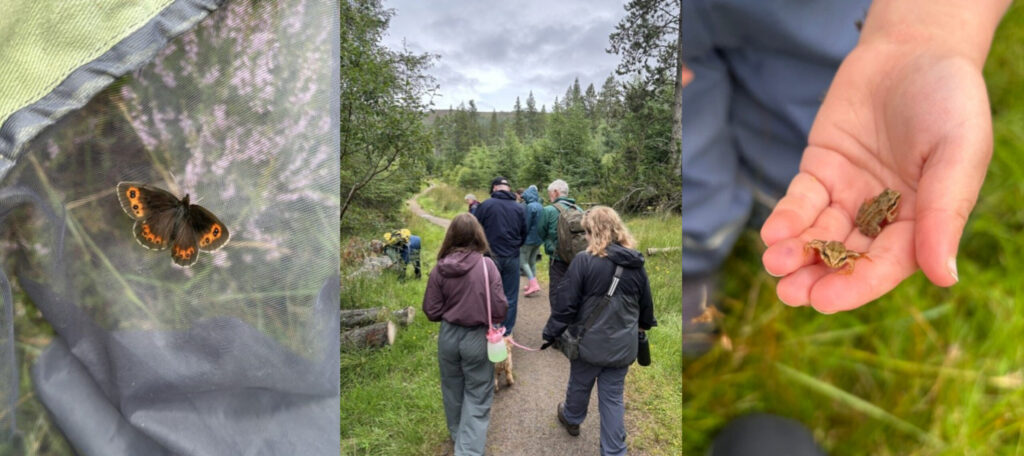
From roe deer to red squirrels
Among the mammals recorded were roe deer, red squirrel, pine marten and wood mouse, each occupying a different part of the woodland – from the tree canopy and dense undergrowth to the forest floor.
The bird list was particularly varied, with mature and older trees offering food and nesting opportunities for great spotted woodpeckers and treecreepers, while the mix of Scots pine and other conifers provides seeds for siskins and goldcrests. Woodland edges and open areas create opportunities for birds of prey like buzzards and kestrels. In the dense undergrowth, wrens, robins and tits find shelter and insects to feed on.
The survey also looked beyond the woodland canopy, with brown trout recorded in the freshwater habitats and common frogs and tadpoles among the amphibians found. These species are indicators of the health of another part of the landscape that can easily be overlooked: the streams, ponds and wetter ground woven through the forest.
A closer look reveals a world of minibeasts
Some of the most interesting discoveries were among the smallest.
The Scotch argus butterfly was one of the highlights. Classified as Vulnerable on the Red List of British Butterflies, it has declined significantly in recent decades. Its presence at Abriachan is a reminder of the importance of the damp grasslands and woodland clearings where it thrives.
The bog hoverfly was another great find. As its name suggests, it is associated with wet, peaty habitats, with its larvae developing in peaty pools and ditches. Adults fly from May to November and visit flowers such as brambles, thistles, knapweeds and Devil’s-bit Scabious.
Alongside these species, participants recorded black darter and four-spotted chaser dragonflies, scalloped oak moths, wolf spiders and yellow-barred pondflies, among many others – revealing just how much life can be found when you take a closer look.
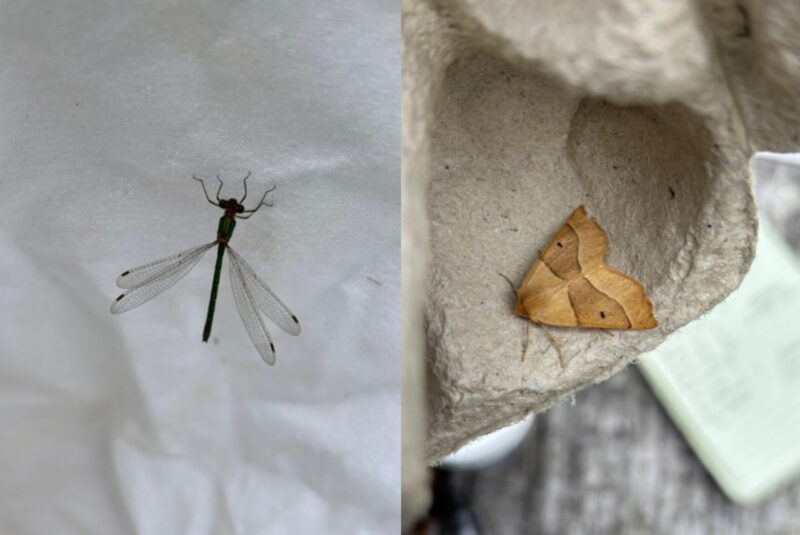
A rich variety of plants
Plants provide the foundation for much of the wildlife found at Abriachan.
Trees recorded included rowan, birch, hazel, oak, willow, aspen, hawthorn, holly and Scots pine, alongside flowering and woodland plants such as foxglove, heather, devil’s-bit scabious, meadowsweet, marsh violet and lady’s mantle.
The diverse mix of native trees creates a varied woodland structure, with different ages, heights and types of vegetation providing places to feed, nest, shelter and reproduce. That structure continues even after a tree dies. Fallen and standing dead wood provide habitat for fungi, lichens, insects and other invertebrates, while decaying wood gradually returns nutrients to the soil.
An impressive fungal haul
The BioBlitz also revealed a rich fungal community.
Among the species recorded were the Sickener (Russula emetica), violet webcap (Cortinarius violaceus), turkey tail (Trametes versicolor), rufous milkcap (Lactarius rufus), slippery jack (Suillus bovinus), alongside several other fungi and lichens.
Fungi are an essential but often unseen part of woodland ecosystems. Some help break down dead wood and other organic matter, while others form close relationships with trees and plants underground.
Slippery jack (Suillus bovinus) forms a symbiotic relationship with Scots pine, with the fungus’s underground threads connecting to the tree’s roots and helping it access water and nutrients. In return, the tree supplies the fungus with sugars. So while the mushroom may appear to be growing independently on the forest floor, it is actually part of a much larger partnership beneath our feet.
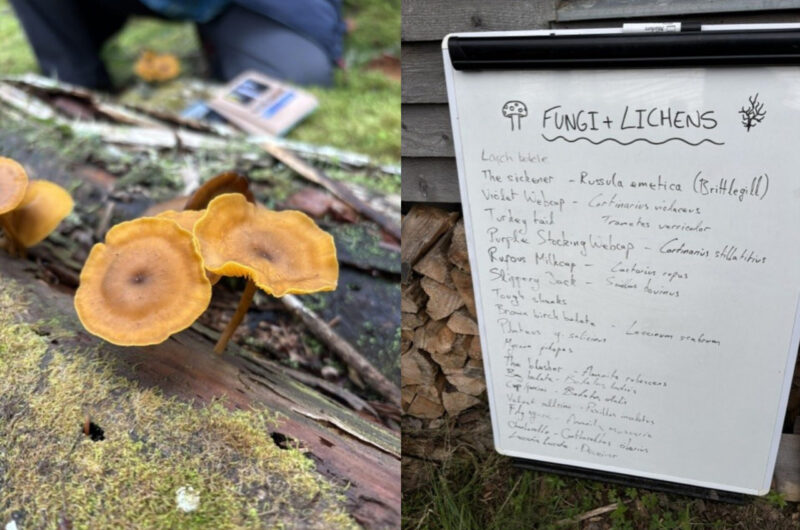
Why citizen science matters
A BioBlitz is more than a list of species.
It is a form of citizen science: bringing people together to observe, identify and record the natural world around them. Each record adds another piece to the picture of how a place works and what lives there.
A single day cannot capture everything. Species appear at different times of year, many are difficult to find, and some will inevitably go unnoticed. But the records provide a useful snapshot – one that can be added to with future surveys and observations.
There is value in that process beyond the data, too. Learning to identify the plants, insects, fungi and other species around us changes the way we see the landscape. A patch of woodland becomes more than trees. A pond becomes habitat. A dead branch becomes a potential home for fungi, insects and other organisms.
That closer look is an important part of understanding what we are trying to protect and restore.
At Rewilding Affric Highlands, we’re working towards a landscape where native woodlands, rivers, peatlands and wildlife can flourish alongside thriving communities. We were delighted to join Abriachan Forest Trust for the day, sharing ideas about rewilding through activities and crafts at our stall.
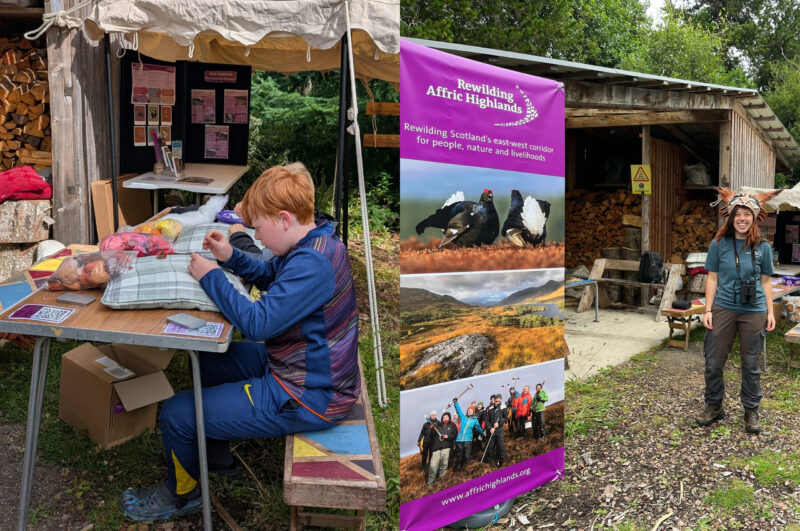
A huge thank you to everyone who helped organise the BioBlitz, shared their expertise, recorded species and came along to explore. More than 100 species were found in a single day. There will be many more still waiting to be discovered.
