
In one of the first and biggest projects of its kind in Scotland, a landscape of more than 1,000 hectares of a globally rare and threatened habitat is being restored near Loch Ness, as part of Britain’s largest rewilding initiative.
A partnership of charities, landowners and businesses has joined together to save and repair a connected area of blanket bog – among the world’s rarest habitats – across three neighbouring and diverse landholdings.
It has been facilitated by charity Rewilding Affric Highlands, which coordinates a growing partnership of landowners which forms the Affric Highlands landscape. Peatland restoration consultancy Caledonian Climate is providing expert advice and support.
The 1,024 hectare-initative is being carried out across rewilding charity Trees for Life’s Dundreggan estate, the privately owned Hilton Guisachan, and Corrimony Farm.
“This is about restoring a whole ecosystem at a landscape scale, and a shared commitment to tackling the nature and climate emergencies and benefitting local communities,” said Stephanie Kiel, Rewilding Affric Highlands executive director.
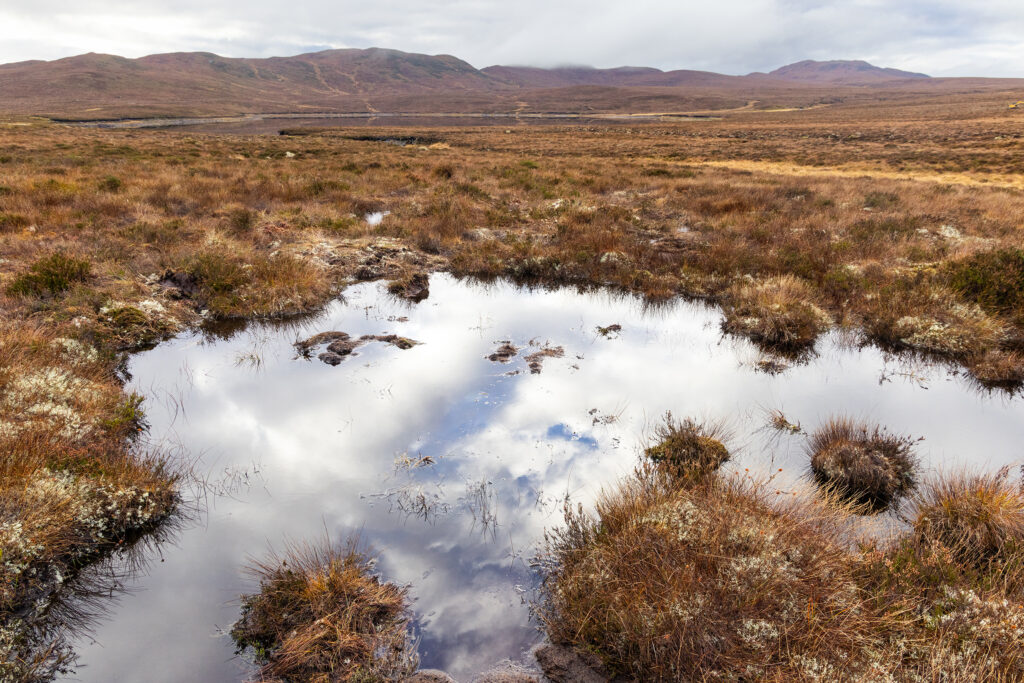
Healthy peatlands play a vital role in storing carbon and are one of the most efficient carbon sinks on Earth. They also reduce flood and wildfire risk by regulating water movement, filter and clean water, and are crucial habitats for a unique range of wildlife and plants.
Scotland contains 13% of the world’s blanket bog – a type of peatland found in only a few parts of the world with cool, wet or oceanic climates. But 80% of the country’s peatlands are degraded, for reasons including drainage, extraction for fuel, overgrazing, and wildfires.
Overgrazing and trampling by high numbers of deer, for example, damages the thin layer of vegetation and prevents natural regeneration of bog plants. This exposes the peat, which starts to dry out and erode – worsening climate breakdown by causing the release rather than absorption of carbon dioxide.
The Affric Highlands peatland project includes 464 hectares at Trees for Life’s Dundreggan estate in Glenmoriston, 315 hectares at Corrimony Farm, and 245 hectares at Hilton Guisachan.
This ecologically important landscape encompasses Loch ma Stac, Loch na Beinne Baine, and Loch Liath. It is home to moorland and wetland birds including dunlin, golden plover, and black-throated divers, as well as otters, water voles, lizards, and invertebrates.
With backing and funding from a British Dragonfly Society-project – supported by the Scottish Government’s Nature Restoration Fund, which is managed by NatureScot – breeding pools are being restored for dragonflies across all the landholdings.
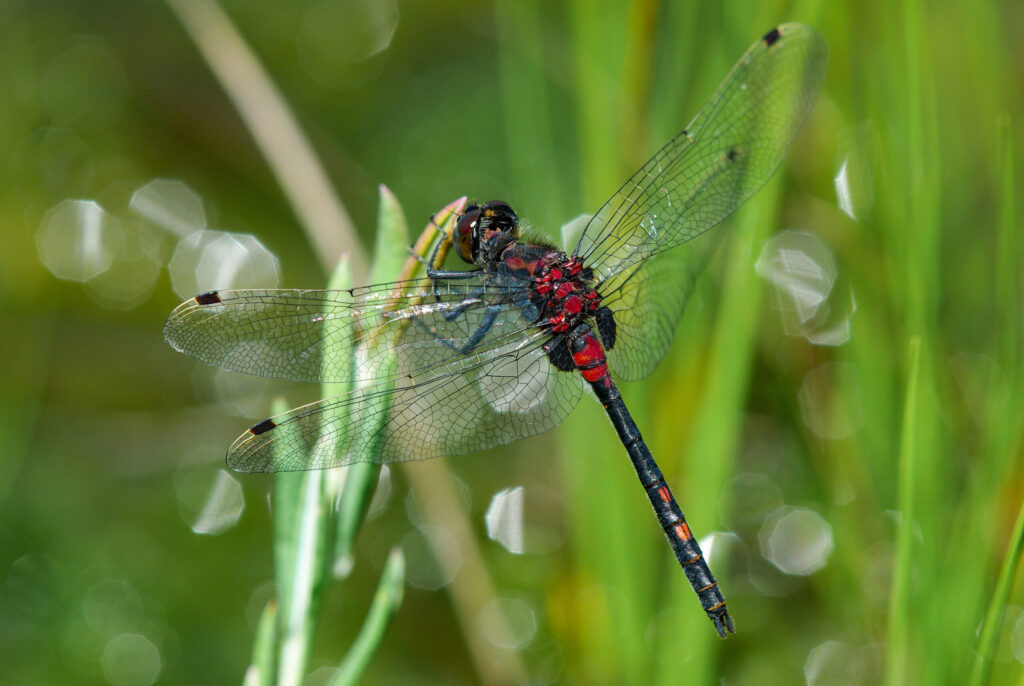
It is hoped these pools will benefit three rare and threatened bog species of dragonfly – the white-faced darter, azure hawker, and northern emerald.
The project will also benefit many peatland plants, including dwarf birch, sundews, alpine bearberry, cloudberry, and sphagnum mosses.
David Girvan of Corrimony Farm, an upland working farm with about 150 suckler cows and 180 breeding ewes, said: “We’re showing that farming can work well with peatland restoration, which makes a real difference for keeping carbon locked up. It’s good to see such a big area across different estates being restored together.”
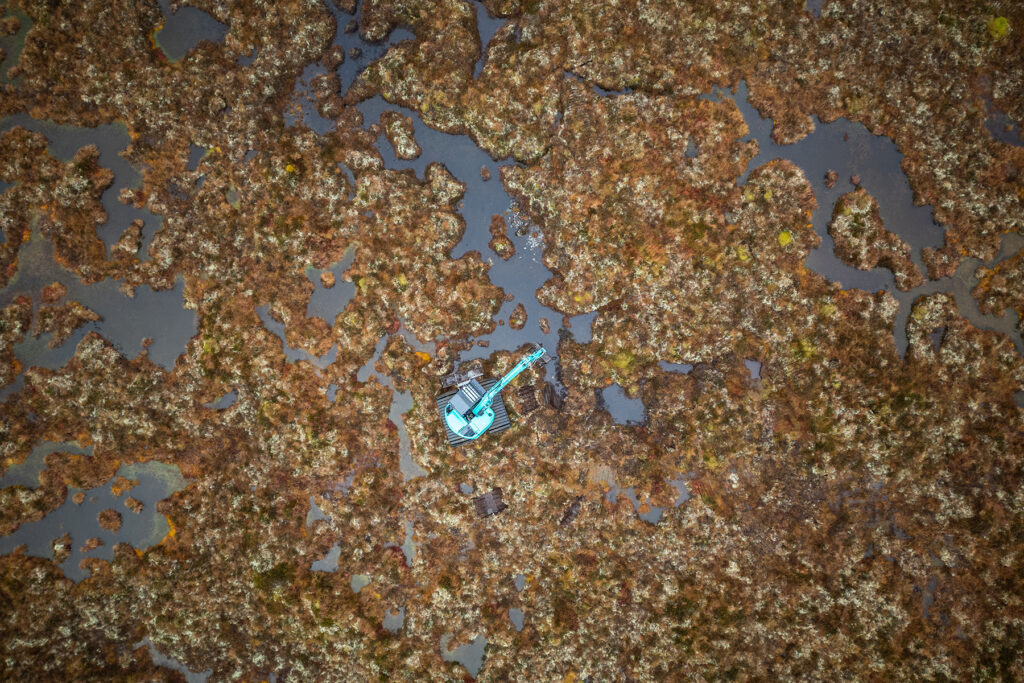
Advanced peatland restoration techniques are being used across the landholdings to halt erosion, raise the water table, and revegetate bare peat areas. Reprofiling peat hags – ridges of eroded dry soil on which vegetation can’t re-establish – and gullies prevents erosion, while drain blocking and dam constructions can rewet the bog and aid regeneration of sphagnum moss
Sphagnum moss transplants are another important strategy. Reintroducing this key peatland species, which can hold up to 20 times its weight in water, promotes the waterlogged, acidic conditions needed for revegetation and peat formation.
“It’s inspiring to be part of this cross-boundary project. The years of planning and organisation have been so worthwhile, because this will benefit people and wildlife now and for generations to come,” said Alex Grigg, owner of Hilton Guisachan.
Peat is a black spongy soil, formed from accumulated layers of sphagnum and other vegetation in waterlogged conditions. Peat forms at a rate of 1mm per year – meaning a single metre of peat can take 1,000 years to form.
“Peatlands are amazing, wild places that are being lost worldwide. With our neighbours, we want this initiative to be a beacon of hope and inspiration for restoring blanket bog across Scotland,” said Gwen Raes, Trees for Life’s Dundreggan estate manager.
Funders for the project include Peatland ACTION, Wilderway, and Alex Grigg. In a further example of innovation, The Peatland Restoration Foundation (PRF), a new initiative led by a group of five individual food and drink companies – PEAT’D, Suntory Global Spirits, Bruichladdich, Isle of Raasay and Inchdairnie – are co-funding the restoration at Corrimony Farm.
The PRF brings together organisations using peat commercially to provide an accessible pathway to ensure that any food or drink company can restore more peat than they use.
Caledonian Climate and Wilderway will carry out monitoring for the IUCN’s Peatland Code, to ensure the project delivers lasting biodiversity and climate benefits. Independent verification will ensure transparency of results.
Affric Highlands, Britain’s largest rewilding landscape, brings together a broad coalition of landowners, local people, charities, businesses and others to boost biodiversity, tackle climate change, and create social and economic opportunities.
It aims to restore nature across more than 200,000 hectares of the central Highlands, through a linked network of landholdings stretching from Loch Ness to Kintail. The growing partnership includes 21 landowners, covering a total of more than 81,000 hectares so far.
Affric Highlands is a member of Rewilding Europe’s family of major European-wide flagship rewilding landscapes.
