
Join Engagement Manager Amy Clarkson on a black grouse survey taster session. In this immersive blog, Amy takes us to RSPB Corrimony to experience the magic of leks, meet local volunteers, and discover how community-led monitoring helps protect one of the Highlands’ most enigmatic and at-risk species.
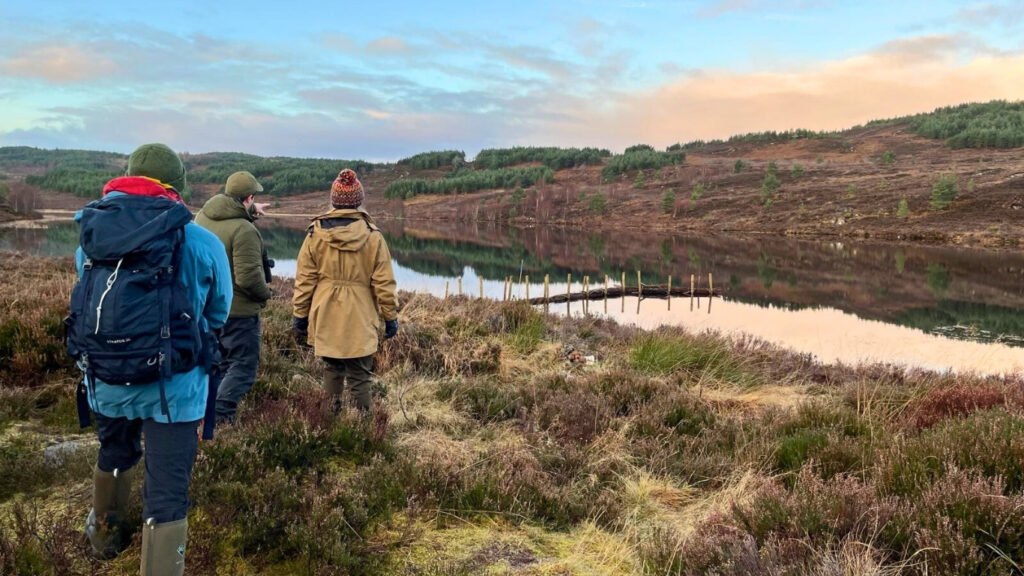
We met at the Corrimony Cairns carpark an hour before dawn and gathered in a circle of head torches, zipping up warm layers against the cold. Birch trees stood silhouetted against the dark blue skyline, and a few stars twinkled above. We piled onto the minibus, full of excited chatter and introductions.
Nicola, the Rewilding Affric Highlands Field Officer, perched at the front of the bus to welcome us aboard our shared mission. Black grouse have been officially declared an at-risk species across the UK since 2021. This central area of the Scottish Highlands is an important refuge where their population, although low, has remained relatively stable. Black grouse have been surveyed for the past ten years at RSPB Corrimony. Nicola developed a passion for involving the local community in the surveys, which are now run as a successful annual programme coordinated by Rewilding Affric Highlands and RSPB Scotland, working together with Forestry and Land Scotland.
The aim of the programme is to bring together a broad range of local community members, including people with some experience and others who, like me, are completely new to bird surveys. For the 2026 survey season starting in March, the project team plan to recruit and train 40 local volunteers to cover 14 survey plots of 5 km². Ambitions are even higher for 2027, aiming for a team of 100 volunteers to cover 40 plots, covering a total area of 200 km².
The data collated in each survey is vital for supporting black grouse. Through repeated years of surveying, it will be possible to observe population trends. Rewilding Affric Highlands will then be able to collaborate with landowners to create management strategies that support this important species and allow it to expand further.
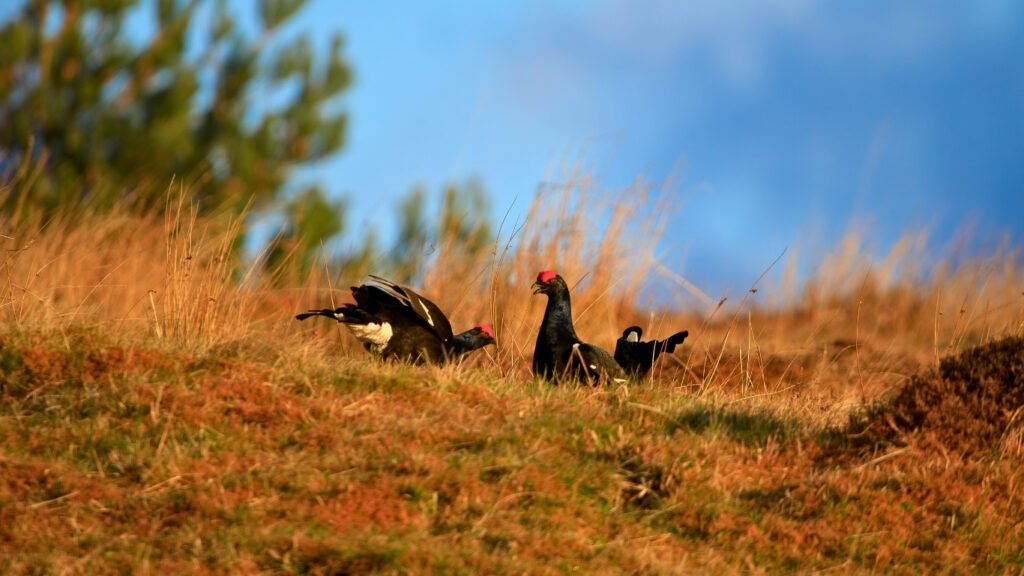
Nicola explains that here at RSPB Corrimony there are accessible leks: places where black grouse gather and males display to each other in an act known as lekking. The birds here are used to some disturbance, so we can drive the minibus through the reserve, sit quietly, and listen for their distinctive sounds. “Keep expectations low,” Nicola advises, “and we’ll hopefully see something.”
There is quiet chatter in the minibus as our newly formed group exchanges stories and encounters. Conversations naturally turn to local landscapes, favourite birding spots, and the behaviour of particular species. As we approach the reserve in the half-light, crepuscular creatures—those most active at dawn and dusk—are still out on the track. A badger gallops over the stone bridge, and a hare pushes through the gate away from the glare of our headlights.
Midway into the reserve, a careful distance from the first lek, the minibus stops. We turn off the lights, drop into silence, and open the windows. We strain our ears into the dark open expanse either side of the track. Nicola explains that ideally, you should hear black grouse before seeing them. The birds are easy to flush, so it is important to be patient, slow down, and listen for the distinctive sound of the males. We leave the minibus and walk up the track toward another known lek, sitting to the side of the track in the heather, binoculars trained on the open field ahead where the birds gather at dawn.
Black grouse are edge animals, preferring places where habitats meet. At RSPB Corrimony, native woodland growing alongside grassland provides ideal habitat for their food cycle. After their late summer moult, the birds feed on berries along the edges of scrub woodland, and will now be feeding on birch and alder seeds from the surrounding trees. In spring, they eat new grass shoots and bog cotton, with chicks raised on insects followed by grass.
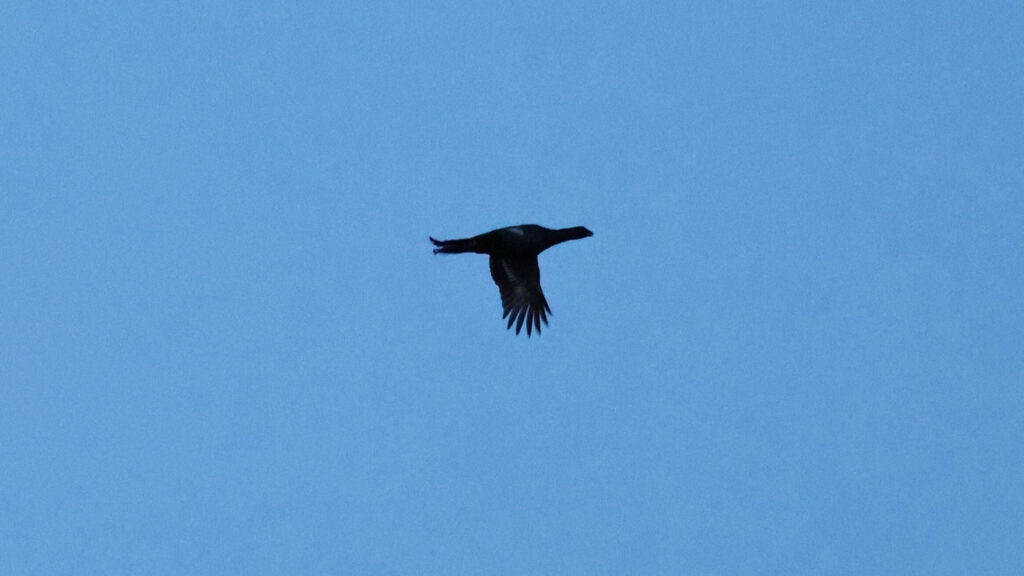
As we edge further up the track, the birds see us before we see them—two black grouse suddenly take flight, skimming the horizon with fast-flapping wings and white tails, calling all the way. In the cool air of the glen, we observe the lek from which they took flight. Eight birds remain on the grass, feeding and interacting socially. They take flight again and settle in a birch tree, clinging to branches that seem too spindly to support them, yet they are as at home in the tree as on the grass or in the air.
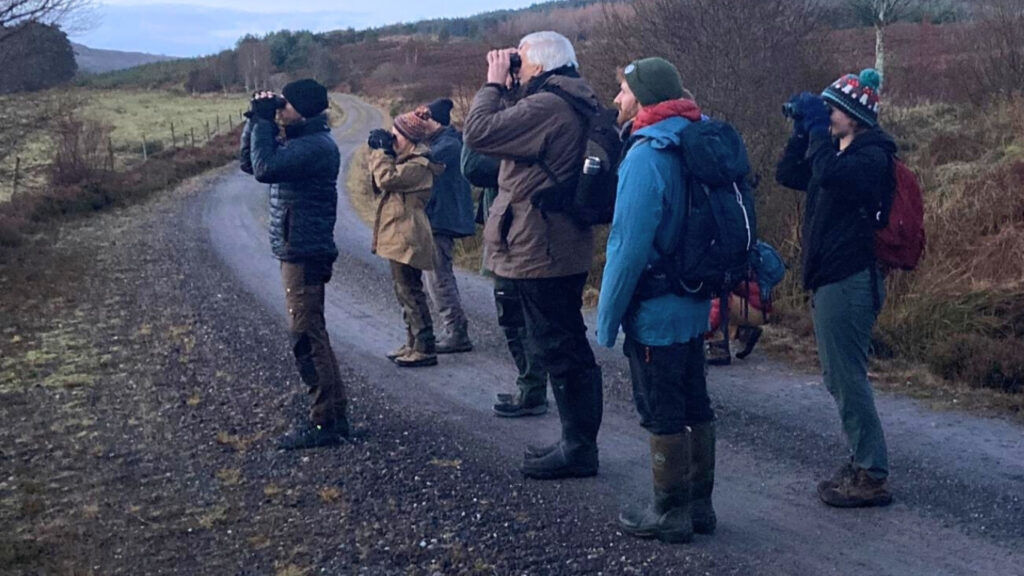
We gather to observe these charismatic birds through binoculars, eager to hear more from Nicola and Alex, the RSPB Reserve Manager. Late March through April and into early May is the main lekking period when the surveys take place. Volunteers will be paired up and allocated a specific survey site to visit regularly. Meeting an hour before dawn, they will walk to known lek sites to listen for the distinctive call of the males, which makes them easier to count, whereas the hens remain camouflaged and discrete. Nicola describes the lek as “like a soap opera”—the hens come and go as males display, aggressively flying at each other, although mostly it’s huffing and puffing rather than any serious assault. “You just kind of fall in love with these birds—they are so entertaining.”
For those who don’t mind early mornings, it is a hugely rewarding volunteer role for an important cause that holds significance for our local landscape. Elsewhere in the UK, these enigmatic birds are in decline, whereas here in the central Highlands, consistent data is needed to build a picture that informs habitat management. What this crucial species needs is a mosaic of habitats which, ultimately, is a healthy landscape for us all.
If you are local to the Beauly region and would like more information about taking part in the 2026 black grouse volunteer surveys, please email info@affrichighlands.org.